
Handling a Canal Boat
How to Steer & Navigate a Canal Boat
Learn how to steer, stop, and reverse a narrowboat. Master the art of slow-speed canal navigation with our essential boat handling guide.

Steering Your Boat
Steering a narrowboat is simple once you remember one golden rule: the boat steers from the back. To move the front of the boat to the right (starboard), you must push the tiller arm to the left (port).
Because the propeller is at the back, the boat only steers effectively when it is in gear and the propeller is turning. If you are in neutral, you will have very little control over your direction. Always plan your turns well in advance, as narrowboats take time to respond to tiller movements.
Key Steering Tips:
- Don't oversteer: Small tiller movements are often enough.
- Watch the "swing": Remember the back of the boat swings out wide when you turn.
- Stay Central: On canals, keep to the middle of the channel where the water is deepest.
- Slow Down: Speed limits are 4mph, but you should go even slower when passing moored boats.
Stopping and Reversing
Narrowboats do not have brakes. To stop, you must put the engine into reverse gear to counteract your forward momentum. This takes time and distance, so always look far ahead for hazards or oncoming traffic.
Reversing in a straight line is notoriously difficult because the propeller "paddles" the back of the boat to one side (known as prop-walk). It is often easier to use short bursts of reverse and neutral to keep the boat straight.
Pro Reversing Tip
When you reverse, your tiller steering becomes almost entirely ineffective. Don't wildly swing the tiller back and forth; keep it central and use short bursts of forward gear to correct your angle if the back of the boat starts to drift.
Passing Other Boats
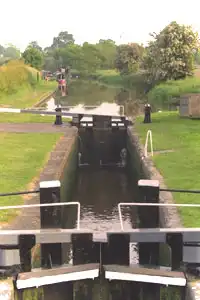
On all UK waterways, you must pass oncoming boats port-to-port (right-side to right-side). This is the opposite of driving on the road.
When passing moored boats, reduce your speed to a tick-over. Moving too fast creates a "draw" that can pull mooring pins out of the bank or cause other boats to bang against the canal side. A considerate boater is a respected boater.
Reading the Water
Always keep a lookout for underwater obstructions or shallow water near the banks. If you feel the boat vibrating or slowing down, you may have "picked up" something on the propeller, such as a plastic bag or old rope. If this happens, stop the engine immediately and check the weed hatch.
This video is hosted by YouTube.
We require your consent to load third-party cookies.
Boating Guides
Comprehensive guides from the Boaters Handbook.

Explore More Guides
Continue reading our essential boating information and holiday tips.
Years Experience
Boutique Boats
TripAdvisor Ratings
Generations