
Locks, Bridges & Tunnels
Navigating Canal Locks, Bridges & Tunnels
A step-by-step guide to navigating canal locks, working paddle gear, and passing through tunnels safely on your narrowboat holiday.
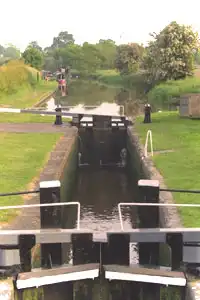
Understanding Locks
A canal lock is simply a chamber with gates at either end. By emptying or filling that chamber with water, your boat can move up or down onto a new section of the waterway.
Although there are many different kinds of canal locks, they all work on a similar principle. With the lock gates closed, you open sluices (the paddles) to let the water in or out. When the water level under your boat is the same as the level you’re moving to, you simply open the gates and move in or out of the lock.
Some locks you operate yourself and others are operated by lock-keepers. Check your particular waterway for details. Always obey specific lock instructions and local information.
Working the Paddle Gear
What is a paddle?
The paddles are the valves by which the lock chamber is filled or emptied. A paddle is simply a sliding wooden panel which, when “lifted” (slid up) out of the way, allows water to either enter the chamber from the upper pound or flow out to the lower pound.
A gate paddle simply covers a hole in the lower part of a gate; a more sophisticated ground paddle blocks an underground culvert. Upstream paddles fill the lock. Downstream ones empty it.
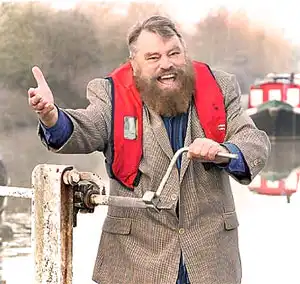
With one crew member at the helm and one at the paddles, you wind the paddle gear up and down using a windlass. You should always wind them bit-by-bit – and keep an eye on the effect of the moving water on your boat.
Important: Always wind the paddles back down – if you let them drop, they could break. On rack and pinion types, remember to engage the safety catch before winding up.
The Windlass (“Lock Key”)
This is a detachable crank used for opening lock paddles. The simplest windlass is an iron rod bent into an L-shape, with a square socket at one end for fitting onto the “stub” protruding from the lock winding gear. Most boats carry three or four windlasses of different types to fit different lock standards.
Navigating Unmanned Locks
Going Uphill
As you approach the lock, send one of your crew to check whether it’s full of water or empty. If it’s empty, they can open the gates and you can steer straight in. If it’s full, moor up below the lock, far enough away to avoid the currents while the lock is emptying. Empty the lock by slowly raising the paddles. Open the gates and steer in.
Close the gates and the paddles behind you. If there are ground paddles by the top gate, open these first. Wait until the lock is half full before opening the gate paddles. Open them very slowly, especially if the paddles are above the low water level.
Keep your boat steady using front and back ropes looped round the bollards – take an extra turn around the bollard to stop the boat pulling you, but don’t tie up. When it’s full, open the gates and take your boat out. Lower the paddles and close the gates behind you.
Going Downhill
Check that the far gates and paddles are closed and then fill the lock (if it’s not already full) by opening the paddles at the end nearest to the boat. When the lock’s full, open the gate and steer in. Close the gates and lower the paddles.
Crucial Safety Warning: The Cill
Keep the back of your boat well clear of the cill on the top gates! Cills are underwater ledges that stick out by up to 5ft (1.5m), and you can only see them when the lock is emptying. If your boat catches on the cill as the water drops, it can be extremely dangerous.
Open the paddles in front to empty the lock, using your engine or ropes to keep the boat as still as possible. When the water levels are equal, open the bottom gates and take the boat out. Close the gates and lower the paddles before you move on.
Sharing a Lock
Always share a lock if you can. And, if the lock’s set against you, check for boats coming from the other direction. The lock will be ready for them to use and it’ll save unnecessary emptying and filling.
In broad locks, boats should be kept to the side with ropes looped round the bollards. Open the two paddles equal amounts, at the same time where possible – and slowly. Make sure there’s plenty of room between you and the other boat.
Bridges & Tunnels
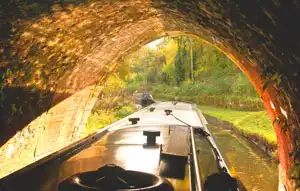
You’ll come across a whole range of bridges on your travels. Some are fixed and some need to be moved out of the way to let your boat pass. Get information on what sorts of bridge to expect on your journey from the navigation authority or by reading a local waterway guide.
Remember that many bridges have low headroom. Weather conditions upstream have an effect on river water levels – adequate clearance today might disappear tomorrow if water levels rise.
Bridges can be narrow too, which means river water tends to speed up as you get nearer. This can draw your boat towards the bridge, so stay alert. Boats traveling downstream on rivers have the right of way at bridges and narrows.
This video is hosted by YouTube.
We require your consent to load third-party cookies.
Boating Guides
Comprehensive guides from the Boaters Handbook.

Explore More Guides
Continue reading our essential boating information and holiday tips.
Years Experience
Boutique Boats
TripAdvisor Ratings
Generations